IFRS 17 compliance is no longer something insurers only think about at year end. For most teams, it’s part of everyday work. It shows up in planning meetings, in conversations between finance and actuarial teams, and in the way results are explained internally and externally.
What sounds like an accounting change on paper has turned into a broader shift in how insurance businesses operate and report.
In the article, we’ll look at what has made IFRS 17 compliance so complex in practice, and how you can bring more structure and control to the reporting projects that are so central to your business.
Let’s get started.
IFRS 17 is an accounting standard created by the International Accounting Standards Board. It has reshaped how insurers think about performance, timing, and even how confident they feel in the numbers they publish.
One of the biggest shifts is how profit shows up.
Under IFRS 17, profit is no longer something you recognise early and move on from. It’s tied to service over time, tracked through the contractual service margin. That means insurers now carry forward unearned profit and release it gradually.
It’s a sensible idea, but it comes with ongoing tracking, explanations, and questions that don’t go away after the first reporting cycle.
There’s also far more emphasis on looking ahead. Measurements are built around expected cash flows, not just what has already happened. Assumptions change. Models are updated.
Results move from one period to the next, sometimes in ways that aren’t obvious at first glance. Those movements then have to be reflected clearly in financial statements, disclosures, and internal reporting.
The measurement approach adds another layer. Some contracts fall under the premium allocation approach, others under the variable fee approach.
For insurers with multiple product lines, this means different rules running in parallel. Over time, managing those differences becomes less about understanding the standard and more about keeping everything aligned and explainable.
What tends to catch organisations out is that IFRS 17 doesn’t settle down. Each reporting cycle builds on the last.
Data quality, assumptions, governance, and timing all matter more than they used to. That’s why many insurers now see IFRS 17 compliance as an ongoing operational challenge, not something that was “done” at implementation.
And once you see it that way, it becomes clear why structure, coordination, and delivery discipline matter just as much as technical knowledge.
Discover best practices for defining scope and managing complex change
Poor scope management is one of the biggest risks in IFRS 17 compliance.
IFRS 17 affects far more than a single report or calculation. It touches on insurance contracts, CSM calculations, risk adjustments, disclosures, and how results flow into balance sheets and financial statements.
Without a clear definition of what needs to be delivered, work quickly becomes fragmented.
In practice, scoping an IFRS 17 programme means answering some difficult but necessary questions early on.
Which product lines are in scope? Which measurement approaches apply — such as the premium allocation approach or variable fee approach? What level of granularity is required for reporting, analysis, and audit?
These decisions directly affect workload, timelines, and cost, yet they are often revisited multiple times as assumptions change.
Another common challenge is that scope doesn’t sit neatly in one team.
Finance teams, actuarial specialists, and reporting teams all depend on each other’s outputs. Changes in expected cash flows or actuarial assumptions can trigger rework in reporting and disclosures. If scope isn’t clearly documented and owned, those knock-on effects are easy to miss until deadlines are close.
This is where specialist programme and project management (PPM) tools start to matter. PPM tools used for IFRS 17 compliance help insurers document scope in a way that connects requirements, deliverables, owners, and timelines.
Instead of relying on static documents and spreadsheets, teams can track what is in scope, what has changed, and why those changes were approved.
That visibility becomes especially important as programmes move from initial implementation into ongoing reporting cycles.
Clear scoping also supports better governance. When regulators, auditors, or internal stakeholders ask why certain data points, disclosures, or assumptions were included, teams can point back to documented decisions rather than relying on institutional memory.
Over time, that discipline reduces rework, improves confidence, and helps IFRS 17 reporting become more predictable.
Defining scope well doesn’t remove complexity from IFRS 17 compliance, but it does contain it. And in a reporting environment that is constantly evolving, containment is often what separates controlled programmes from ones that feel permanently reactive.

See how insurers can deliver Digital Claims Transformation with stronger governance and clearer scope control.
Once IFRS 17 work moves into a regular reporting rhythm, the question insurers face is no longer what needs to be done, but how confidently they know where they are.
Reporting deadlines come around quickly, and teams are often working on multiple periods at once. Without a clear way to track progress, it’s easy to lose sight of what is genuinely complete and what is still relying on assumptions or late inputs.
In practical terms, tracking IFRS 17 activity means keeping sight of several moving pieces at the same time. Actuarial model updates, data availability, calculations, reviews, and disclosures rarely move at the same pace.
A delay in one area can sit quietly for weeks before it suddenly becomes a reporting issue. PPM tools that support IFRS 17 compliance help teams surface those dependencies earlier, when there is still time to respond.
Risk tracking plays a similar role. Many risks under IFRS 17 are familiar — data quality issues, model changes late in the cycle, key people stretched across too much work. What causes problems isn’t the existence of these risks, but the lack of visibility over them.
When risks are logged, owned, and revisited as reporting progresses, they are far less likely to turn into last-minute surprises.
Reporting readiness is often where pressure is felt most.
Finance teams need confidence that inputs are complete, reviews have taken place, and disclosures are aligned before results are finalised
When that confidence is missing, time is lost chasing updates instead of resolving issues. Clear status tracking helps teams focus on what still needs attention, rather than trying to piece together where things stand.
Over time, this kind of tracking also builds insight. Patterns start to show — recurring delays, fragile hand-offs, or areas where assumptions change frequently. That information is valuable. It allows insurers to strengthen processes and make IFRS 17 compliance feel more controlled from one reporting cycle to the next.
Discover the five steps insurance organisations can take to manage uncertainty with more confidence.
IFRS 17 compliance isn’t a single task that starts and finishes. It’s a stream of activity that repeats every reporting period, often with small changes that still need to be tracked carefully.
This is where project management tools start to earn their keep.
They give teams somewhere reliable to plan work and see what’s actually happening, rather than relying on status updates passed around in meetings or buried in emails. When tasks, milestones, and owners are visible in one place, it becomes much easier to tell what’s done, what’s late, and what still depends on someone else.
Coordination is another challenge.
IFRS 17 workload moves between actuarial, finance, and reporting teams, and those hand-offs don’t always line up neatly.
A delay in one area can sit unnoticed until it becomes a problem. PPM tools help to surface those dependencies earlier, when there’s still time to respond rather than react.
Governance also feels different when it’s supported properly. Instead of trying to remember who approved what, or when an assumption changed, teams have a record they can trust.
IFRS 17 compliance project management tools make it easier to keep decisions, updates, and changes alongside the work itself, which helps when questions come later from auditors or internal reviewers.
Over time, these tools start to show patterns. Certain steps always take longer. Certain risks come back every quarter. Seeing that makes it easier to improve how work is planned and resourced, instead of repeating the same fixes each cycle.
Used well, project management tools don’t get in the way. They quietly support the work, helping teams stay oriented and focused as IFRS 17 reporting continues to evolve.
IFRS 17 work is rarely confined to a single project. PM3 is designed to support outcome-driven portfolio, programme, and project management, helping insurers manage IFRS 17 compliance as a connected programme rather than a collection of disconnected tasks.
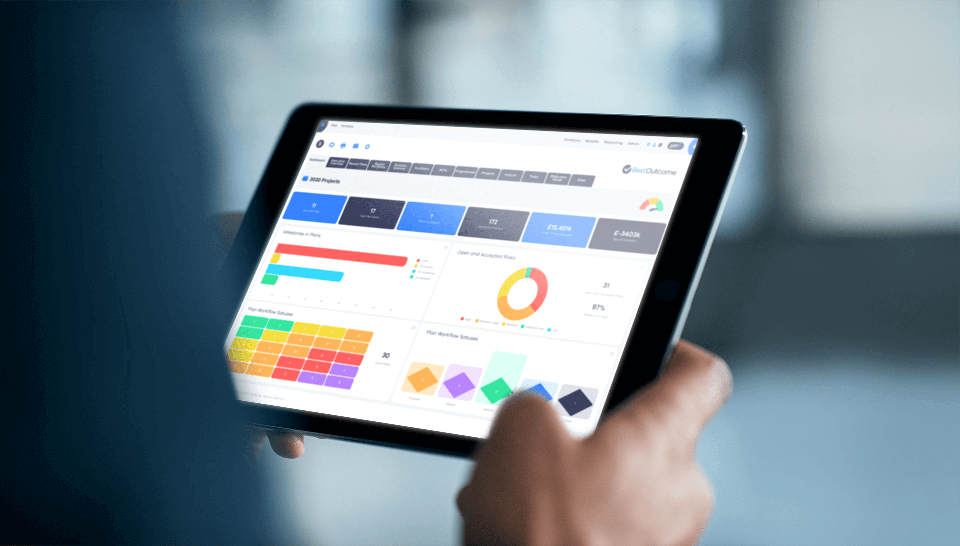
PM3 provides dashboards and more than 200 out-of-the-box reports, giving teams a clear view of progress across IFRS 17 initiatives. This visibility helps teams understand what is on track, where risks may be emerging, and how different projects relate to each other — without relying on manual updates.
IFRS 17 compliance often competes with other regulatory and business priorities. PM3 helps organisations prioritise work and align projects with strategic goals, reducing the risk of misaligned investment or effort being spread too thin across initiatives.
IFRS 17 programmes rely heavily on finance, actuarial, and reporting specialists. PM3 helps teams understand resource allocation and capacity constraints, making it easier to plan work realistically and reduce bottlenecks across reporting cycles.
PM3 adapts to how teams already work, supporting agile, waterfall, or hybrid delivery approaches. Its configurable setup allows organisations to reflect existing processes rather than forcing change, which is particularly important in regulated environments.
PM3 is designed to show users only what they need. This reduces training time, improves adoption, and helps teams focus on delivery rather than navigating complex systems. The built-in PPM learning hub further supports consistent ways of working.
PM3 is supported by training and mentoring from experienced PPM specialists. This helps organisations strengthen governance and delivery practices around complex programmes like IFRS 17 compliance, not just implement a tool.
For most insurers, IFRS 17 compliance isn’t something that gets finished and filed away. It sits alongside everything else, quarter after quarter, shaping how results are prepared and how confident teams feel when those results are shared.
We hope you’ve enjoyed this short overview of how PPM tools like PM3 can support your OKRs by providing clear, accountable and accurate visibility and reporting across all projects and teams.
To find out more about PM3, watch a demo here or feel free to get in touch with one of our dedicated PPM experts.
Image sources: Astrid.IQ

Our products help you deliver successful change programmes and projects by always focusing on the overall business outcomes. Find out how our products can help you.
Discover PM3 Schedule a demo...
Read more >...
Read more >