Portfolio management in banking has never felt more essential than it does today. Banks are juggling rising costs, new regulations, shifting customer expectations, and the constant unpredictability of global financial markets.
Effective banking leadership now goes far beyond building an investment portfolio or applying familiar investment strategies. It’s about seeing the bigger picture. It’s about aligning every initiative with clear investment objectives, understanding your risk exposure, and making smarter, more grounded investment decisions when resources are tight and pressure is high.
In this article, we explore how taking an investment-style mindset — one rooted in thoughtful portfolio management, long-term value, and a realistic view of today’s challenges — can help banks deliver better outcomes, control costs, and stay resilient no matter what the market throws at them.
Let’s begin.

Every week, leaders are dealing with rising costs, new regulations, unpredictable financial markets, and constant pressure to modernise.
Banks need a clearer way to decide what to invest in, what to pause, and what genuinely supports the organisation’s long-term financial goals.
For many banking teams, this means thinking differently about change. A modern portfolio manager isn’t just coordinating projects — they’re weighing choices the same way someone managing investments would assess an investment portfolio.
They’re looking at market risk, resource constraints, and how initiatives line up with wider investment objectives. In many ways, they’re operating like institutional investors evaluating funds, securities, and asset classes, but applied to transformation rather than the stock market.
The pressure to get these decisions right has never been higher.
Banks face new competitors, shifting customer expectations, and economic cycles that can turn quickly. Without a grounded investment philosophy, even well-meaning initiatives can overrun, stall, or fail to deliver meaningful value. It’s easy for costs to spiral when dozens of teams, systems, and priorities collide.
This is where strong, thoughtful portfolio management makes a real difference. It gives leaders a way to step back, assess what matters, and make better investment decisions across a wide range of work.
Whether the goal is reducing debt, improving liquidity, or driving growth, a structured approach ensures each initiative contributes to the bank’s bigger picture — not just today, but over the long term.
And just like a well-run diversified portfolio, the best banking portfolios are actively guided. They’re shaped around clear risk tolerance, regularly reviewed as the market shifts, and balanced to support sustainable outcomes for clients and investors.
When this mindset becomes part of everyday decision-making, banks put themselves in a much stronger position to adapt, compete, and deliver lasting results.

Learn how to stay ahead of constant regulatory updates with practical strategies for resilience.
The role of portfolio management in banking has changed dramatically over the last decade.
What used to be a fairly operational function — tracking timelines, budgets, and status reports — has evolved into something closer to guiding an investment portfolio. Banks now need to think in terms of asset allocation, long-term investment objectives, and how different types of investments fit together to support strategy and stability.
This shift has been driven by reality. Regulations have become more demanding, customer expectations have risen, and technology moves faster than most teams can keep up with.
To cope, many banks have found themselves taking inspiration from how institutional investors and funds approach their work: through thoughtful investment strategies, careful due diligence, and a clear view of the bank’s overall risk tolerance.
In practice, this means a portfolio manager in a modern bank now behaves more like someone actively managing a diversified portfolio across many asset classes. They’re weighing options, challenging assumptions, and ensuring each initiative supports the bank’s wider financial objectives.
Instead of focusing only on delivery, they’re also thinking about long term performance, value, and how to make smarter choices during unpredictable economic cycles.
One of the biggest changes is the shift from purely technical oversight to a more strategic investment approach.
Leaders want to understand not just “Can we deliver this?” but “Should we deliver this right now?”, That requires a mindset similar to reviewing investment options or comparing mutual funds, hedge funds, or index funds.
Some initiatives will be high-risk, high-reward. Others will provide stability, like a benchmark index. Some will be essential to compliance, and others will open doors to growth.
This more strategic view has also created new expectations for managers and teams. They’re expected to collaborate across the bank’s global network, work with co managers, and partner with functions like finance, risk, and technology. And, just like with professional managing investments, there’s an importance placed on transparency, clear reporting, and supporting clients and investors through smart, well-structured decisions.
What’s becoming clear is that portfolio management is no longer just a support function. It’s becoming one of the central ways banks stay resilient, control capital, improve liquidity, and navigate uncertainty across different sectors and markets.
The banks that treat their change portfolios with the same discipline as their financial investments tend to make better choices — and avoid the costly detours that come from spreading money and assets too thin.

Learn how financial institutions strengthen resilience with a practical seven-step approach to modern risk management.
As banks mature their approach to portfolio management in banking, one idea keeps coming up: the importance of balancing scope, risk, and ROI. It’s a simple framework, but it gives leaders a clearer way to make confident investment decisions, especially when budgets are tight or priorities shift quickly.
Let’s start with scope. In many organisations, projects begin with the best intentions but drift as more features, requirements, and expectations are added.
A thoughtful portfolio manager treats scope almost like asset allocation within an investment portfolio. If too much is packed in, the cost rises and the expected value falls. But when scope is shaped around clear investment goals, the bank stays focused on what will genuinely move the needle.
Then there’s risk — an unavoidable part of both banking and investing. Banks regularly face regulatory pressure, cyber threats, market risk, and operational challenges.
Knowing the bank’s risk tolerance helps leaders decide which initiatives carry acceptable uncertainty and which ones could expose the organisation to unnecessary strain. It’s similar to choosing between actively managed funds, passive management options like index funds, or different asset classes depending on the organisation’s appetite.
Finally, ROI ties it all together. In banking, ROI isn’t just about revenue uplift. It also includes better liquidity, improved capital efficiency, stronger compliance, and long-term stability for clients and investors.
A good ROI assessment looks beyond short-term wins and considers how an initiative strengthens the bank’s strategic objectives over time.
When scope, risk, and ROI work together, they give leadership a much clearer picture. Instead of seeing dozens of separate tasks, the bank sees a cohesive portfolio — one that can be adapted, rebalanced, or streamlined as the market changes.
This mindset helps avoid wasted money, protects critical assets, and ensures the organisation is always aligned with its wider financial objectives.
In many ways, this framework reflects the discipline behind strong investment philosophy. It encourages teams to think like managers who are actively managing a diversified portfolio for their clients, carefully reviewing securities, considering different types of initiatives, and making decisions based on due diligence, not momentum or habit. And when banks adopt this approach, their ability to deliver meaningful, sustainable growth improves significantly.

See how PMOs improve compliance and delivery in financial services
One of the biggest challenges in portfolio management in banking is making confident choices when the future isn’t clear.
Regulations shift, financial markets react to global events, and customer needs evolve faster than most planning cycles. That’s why scenario modelling has become such an important part of how banks make smarter investment decisions.
Scenario modelling gives leaders the space to explore different paths before committing real money, time, or assets.
It’s similar to how institutional investors compare investment options, look across different asset classes, and weigh the potential of actively managed funds versus index funds.
Instead of guessing, they look at how each choice performs under changing conditions, whether that’s rising market risk, new competitors, or shifting economic cycles.
For banking teams, it works the same way. A strong investment approach lets leaders test what happens if they accelerate a transformation programme, delay a regulatory project, or rebalance the entire portfolio for better liquidity or lower debt exposure. Each scenario shows how decisions affect the bank’s capital, financial objectives, and long-term value — helping avoid surprises later.
This modelling also helps ensure that the bank’s investment philosophy stays intact. Some initiatives will deliver quick wins; others behave more like stable securities that support steady growth.
A few may be high-risk, high-reward, similar to private equity or emerging opportunities in new sectors. By comparing these side by side, a portfolio manager can guide clients, teams, and investors through choices that reflect real priorities and realistic outcomes.
The human side of this is just as important. Scenario modelling encourages teams to ask better questions, challenge assumptions, and avoid over-committing to projects simply because they’ve always been done a certain way.
With input from co managers, finance partners, risk specialists, and the wider global network, leaders gain a clearer, more honest view of what’s possible — and what’s not.
In the end, good scenario modelling helps banks act with more confidence. When teams can assess choices in a structured way, they’re less likely to overspend, chase the wrong investment ideas, or be caught out by rapid changes in the market. Instead, they make thoughtful, balanced decisions grounded in evidence, experience, and the bank’s real long-term objectives.

Discover practical strategies for improving oversight and audit readiness.
Cost optimisation has become a real priority in portfolio management in banking. It’s not just about tightening budgets — it’s about making thoughtful choices so banks spend money on the initiatives that actually create value.
With pressures coming from every direction, from regulation to technology upgrades, banks need a clearer way to understand what’s worth investing in and what isn’t.
A good portfolio manager brings that clarity. Instead of looking at projects in isolation, they step back and see the whole portfolio — almost like reviewing a diversified portfolio of investments. They help leaders understand which initiatives support long-term financial objectives, which ones carry unnecessary risk, and where the organisation may be tying up precious assets, capital, or team capacity without real benefit.
One of the most eye-opening parts of this work is spotting duplication.
In large banks, it’s surprisingly common for different teams to buy similar tools, run overlapping projects, or tackle the same problem at the same time.
When leaders apply the same discipline they’d use when reviewing investment strategies, comparing individual securities, or assessing funds, those hidden overlaps suddenly become visible — and fixing them frees up significant resources.
Another part of cost optimisation is knowing the difference between what’s essential and what’s simply “nice to have.”
Compliance projects often behave like stable components in an investment portfolio — they may not generate big returns, but they protect the bank. Transformation work, meanwhile, is more like choosing between active management, passive management, or generally actively managed approaches across different asset classes.
Each decision has a different level of risk tolerance, urgency, and potential upside.
Technology teams, risk experts, and business leaders all bring important perspectives here. With stronger collaboration and a clear investment philosophy, banks avoid rushing into decisions or reacting to pressure without proper due diligence. They’re better equipped to manage debt, maintain strong liquidity, and focus on initiatives that genuinely support growth and long-term performance for clients and investors.
In the end, cost optimisation isn’t just about cutting back — it’s about spending smarter.
When banks use thoughtful, human-centred portfolio management, they avoid wasted effort, reduce confusion, and make decisions that truly strengthen their position in the market. It’s a calmer, clearer, and ultimately more effective way to navigate an increasingly complex world.

Discover practical strategies to manage project budgets effectively.
With shifting regulations, evolving customer expectations, and rapidly changing financial markets, leaders need clear, reliable data across the entire portfolio to make confident decisions.
Modern PPM tools help bring that clarity. They pull together costs, risk, timelines, and expected value in one place — almost like the platforms institutional investors use to track funds, securities, and different asset classes.
For a busy portfolio manager, this makes it far easier to guide teams and support smarter investment decisions that align with long-term financial objectives.
Good technology also helps banks spot problems early. Duplicate work, drifting scope, or initiatives that no longer match the bank’s investment goals become much more visible. It’s similar to rebalancing an investment portfolio when market risk or economic cycles shift — the sooner you see the issue, the easier it is to respond.
Most importantly, technology strengthens collaboration. When finance, risk, IT, and business teams all see the same information, they can act as true co managers with a shared investment philosophy.
Decisions become calmer, clearer, and more grounded — and that’s exactly what clients, leaders, and investors expect from a modern bank.
Modern portfolio management in banking depends on clarity, alignment, and the ability to make confident decisions quickly. PM3 is designed exactly for that — helping you cut through complexity and keep your portfolio focused on real outcomes rather than noise.
Banks often struggle with scattered data and inconsistent reporting.
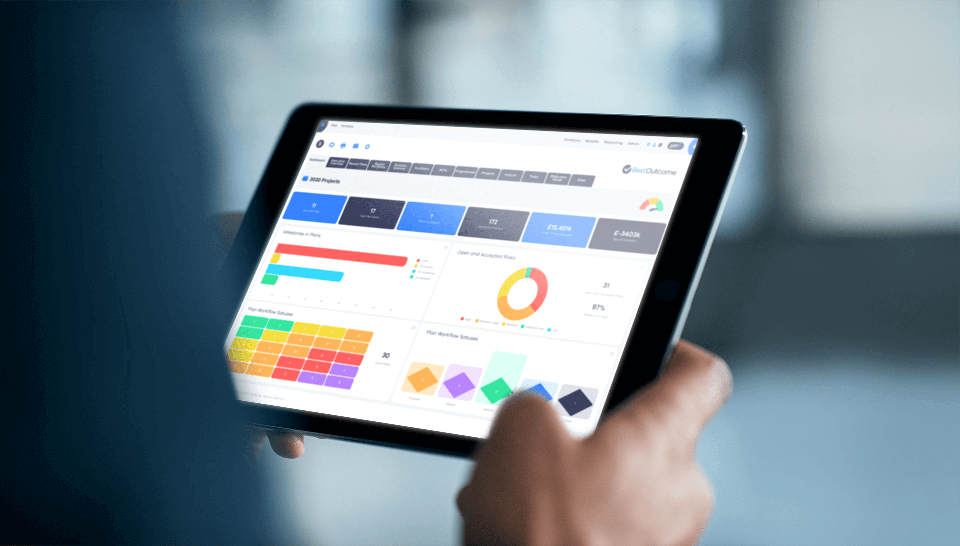
PM3’s dashboards and 200+ out-of-the-box reports make it easy for a portfolio manager to see what’s on track, where risk is rising, and how initiatives support wider investment objectives.
This helps leaders make better investment decisions without digging through spreadsheets.
With shifting regulations and evolving customer needs, banks need confidence that their limited capital, assets, and team capacity are going to the right places.
PM3’s prioritisation and alignment features help organisations focus on initiatives that genuinely support long-term value, growth, and strategic investment goals.
Capacity bottlenecks can derail even the strongest portfolio management approach.
PM3 helps banks understand where resources are overstretched, where gaps exist, and how to schedule work more realistically.
This is especially important in fast-moving environments where projects span multiple sectors and delivery methods.
Many banks struggle to track whether their investments are delivering the promised benefits.
PM3’s benefits-realisation features keep teams focused on outcomes — from improved efficiency to clearer strategic value.
It encourages a mindset that mirrors strong investment philosophy: don’t just deliver; deliver impact.
Banks rarely work in a single delivery method.
PM3 adapts to agile, waterfall, and hybrid approaches, so teams don’t have to reshape their processes or adopt rigid structures.
This flexibility makes adoption smoother and keeps delivery aligned to real working practices.
PM3 stands out because it’s easy to configure and doesn’t require months of consultancy or complex onboarding.
Banks also get hands-on support and mentoring from experienced PPM specialists — a reassuring factor when dealing with high-stakes portfolios and evolving financial objectives.
Above all, PM3 is built around an outcome-first philosophy.
It helps teams focus on what matters, stay aligned to strategy, and create clearer, more human-centred portfolio management practices — something every bank needs in an unpredictable market.

Our products help you deliver successful change programmes and projects by always focusing on the overall business outcomes. Find out how our products can help you.
Discover PM3 Schedule a demo...
Read more >